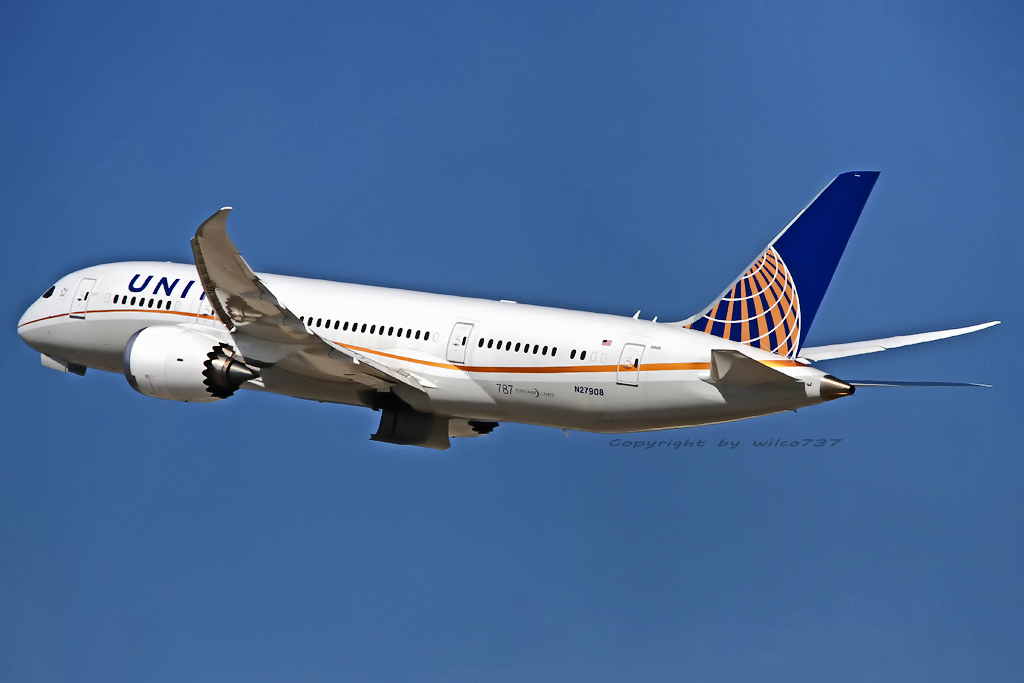
What’s the issue? Recently, we all saw this video of airport security personnel violently dragging a doctor off of a United Airlines flight after he refused to give up his seat on the overbooked flight for a United employee. This was an admittedly terrible incident, but it resonated deeply with many of us who fly. It was a graphic representation of what all too many feel to be true- flying increasingly takes away our comfort and our dignity. Many responded to the United video by using their power as consumers to proclaim they would never fly United again. However, this isn’t really possible for most consumers. The United States only has four major airlines: United, American, Delta, and Southwest. At 93 of the top 100 US airports, only one or two airlines control the majority of the market. So if you want to fly (especially cheaply), you likely won’t have much of a choice of airline. In a society that increasingly relies on air travel for both business and pleasure, consumers have largely lost their power to regulate the airlines through choice alone.
Why do I care? While we can’t always use the power of the purse to resist the increasing unpleasantness of flying, there are some things the government can do to help. Until 1978, the US airline industry was regulated by the government (like a public utility). The government determined where airlines could fly and how much they could charge. The government also regulated (and still regulates today) many safety measures including aircraft certification, pilot licensing, and airspace regulation (through the FAA).
In 1978 the airline industry was deregulated, with the idea that increased competition would drive down costs and increase efficiencies. However, the airline industry, like all other industries, is still subject to antitrust legislation aimed at preventing the stifling of competition and creation of monopolies. Nonetheless, since the year 2000, six major mergers consolidated the ten major US airlines to just four today. These mergers were approved by the Bush and Obama administrations. The last of these mergers, between American Airlines and US Airways (in 2013), was originally opposed by the Department of Justice. According to the complaint, “increasing consolidation among large airlines has hurt passengers. The major airlines have copied each other in raising fares, imposing new fees on travelers, reducing or eliminating service on a number of city pairs, and downgrading amenities.”
Unfortunately, the airlines have a formidable lobby. According to opensecrets.org, which tracks money in US politics, in 2014 the airline industry donated $3.6 million during the federal election and spent $26.5 million on lobbying. This ProPublica piece describes in great detail the extent to which American and Delta lobbied for their merger. Among more orthodox tactics, ProPublica also found that American executives became first time donors to Rahm Emanuel’s reelection campaign after the mayor advocated on their behalf, and a lobbyist told Congressman Tom Horne that if he didn’t drop his opposition to the merger, the airlines would spend $50,000 on ads against him. American and Delta spent more than $10 million combined on lobbying that year. Perhaps unsurprisingly, the Justice Department dropped its opposition just three months after its original objection, paving the way for the merger. (For what it’s worth, United has spent $7.6 million dollars lobby Congress during the past two years, and has lobbied against many customer-focused issues including setting a minimum size for airplane seats, guaranteeing families can sit together on the plane, and prohibiting charging customers to use the airplane bathroom.)
A year and a half after the merger was completed, several of the fears outlined by the government have come to pass including higher prices, reduced routes (especially to small- and medium-sized cities), and the reduction of the Advantage Fares program (which offered discounted one-stop flight options to compete with lucrative nonstop routes). Shortly after the merger, the Justice Department opened an investigation into possible collusion between the four remaining large carriers to limit seats and raise prices, although the investigation was later dropped.
During his campaign, Trump signaled opposition to large mergers and monopolies by speaking out against the AT&T/Time-Warner merger and Amazon. However, once in office he appointed members of his cabinet who are decidedly against antitrust legislation. Trump himself has given little indication of the antitrust views of his administration, creating an atmosphere of uncertainty for now.
What to do if you care too:
- When possible, try to find out if your representatives are receiving campaign contributions or other perks from the airline lobby. This is notoriously tricky information to get. Open Secrets has some info, but we should be urging our lawmakers to disclose more.
- Call your Congresspeople and voice your support for the Seat Egress in Air Travel Act (which would create a federal minimum seat size and distance between airplane rows) and the Know Before You Fly Act (which would require airlines to be upfront about what they offer to customers in the face of travel delays).
- Be on the lookout for antics from the airline industry leading up to September 30th, when Congress has to reauthorize funding for the FAA. Some airlines would like to see the FAA privatized.
Cover photo from Flickr.
 Persistence
Leave a comment