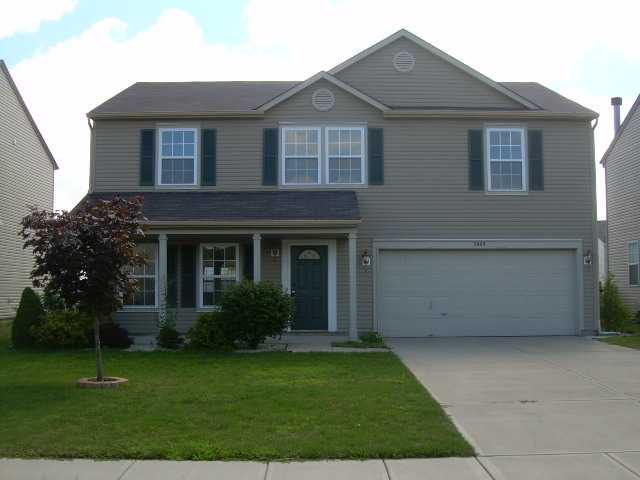
What’s the issue? In the United States, there are substantial tax benefits to home ownership. One of these is the mortgage interest deduction (MID). With the MID, taxpayers can deduct any interest on the mortgages they pay for their first and second homes, up to one million dollars. Although there is no sign yet that he will do so, Trump could revise the MID in his planned tax overhaul.
Why do I care? The MID is a huge government subsidy program hiding in plain sight, and one that perpetuates inequality. In 2015, the United States spent $71 billion on the MID, most of which went to the wealthy. In fact, in 2013, 73% of the MID went to the top 20% of earners, while the bottom 20% of earners (who don’t usually own homes) got next to nothing. The middle class does benefit from the MID, but only modestly so. In 2014, households that earned between $40,000 and $50,000 and claimed a MID received an average of $14 savings per month. Meanwhile, households will earnings above $200,000 received an average benefit of $391 a month.
One argument in favor of the MID is that it incentivizes home ownership, but that doesn’t appear to be true. The United States has similar rates of homeownership to countries without a MID, including the UK and Canada. Meanwhile, the MID encourages those buying homes to have higher mortgages either by buying more expensive homes or making smaller down payments. This effect artificially inflates the price of homes in the United States by 13-17%, which in turn makes it harder for those who do not already own a home to afford one.
(Matthew Desmond’s article in the New York Times Magazine, which I cite repeatedly here, has a fascinating and disheartening explanation of how US policies following WWII led to a rapid increase in homeownership for white Americans, while simultaneously excluding people of color. The result is that today only 41% of black Americans own homes, while over 70% of white Americans do.)
Meanwhile, the United States is facing a housing crisis among its renters. Over half of low-income renters spend 50% of their income on rent, and one in four spends over 70%. Perhaps unsurprisingly then, Americans face a high number of evictions. Between 2009-2011, for example, 1 in 8 residents of Milwaukee was evicted or forced to move. Due to budget constraints on federal housing subsidies, only a quarter of households that qualify receive government assistance for housing.
Eliminating the MID would not solve the housing crisis in and of itself, but it would free up money that could be retargeted to those most in need of secure housing. The Congressional Budget Office estimates it would take $29 billion a year to guarantee housing for Americans earning less than 30% of regional income or $41 billion for those earning less than 50%, far less than the $71 billion we’re spending on the MID. Because the MID benefits wealthier individuals/voters and is backed by the real estate lobby, it is extremely unlikely to be eliminated. However, even if the MID cap were reduced from one million to $500,000, the government could save $87 billion over ten years, even though fewer than 6% of mortgage owners would be affected.
What to do if you care to:
- Read Evicted by Matthew Desmond. His groundbreaking work lays out the extend of the housing crisis we are facing as a nation, and he is leading the thought leadership in this area.
- Call your Congresspeople and ask them to support capping the MID and to support the expansion of low-income housing assistance.
- Raise awareness about the MID. Remind people it exists and point out how regressive it has become.
- Support housing voucher programs on a local and national level.
Cover image by deovolenti from Flickr.
 Persistence
Leave a comment