What’s the issue? Donald Trump has created a Commission on Election Integrity formed to investigate his belief that he lost the popular vote due to millions of illegal votes. In one of its first acts Kris Kobach, the vice-chair of the commission, wrote to all fifty states requesting voter registry information including names, birthdates, the last four digits of social security numbers, and party affiliation.
Why do I care? There are many problems with requesting voter registry data from states, including that giving up this information violates the laws of some states, and that having all of this information together in one place is a security risk and a target for hackers. However, my main concern is that this data will not be used to analyze vulnerabilities in our voter registries, as they claim, but rather as a tool for voter suppression.
There are many reasons to believe this. For starters, Kris Kobach has a strong history of voter suppression in his home state of Kansas. The policies he enacted during his tenure as secretary of state are being challenged by multiple lawsuits that claim they violate the Voting Rights Act. Additionally, attempting to identify unlawful voters through the information Kobach is requesting from states has been tried before, with a program called Crosscheck. A study of that program showed that it nullifies 200 legal registrations for every one actual inconsistency found. What’s more, this methodology targets people with the same name, and it turns out that minorities are overrepresented in 85 of the 100 most common US surnames. Even if it did work, this is wasted time and effort. Many studies and investigations have found that voter fraud is actually so rare in the United States that it essentially a non-issue.
Identifying voter fraud, then, is just a cover for what this commission hopes to accomplish; making it harder for people to vote. According to the Atlantic, having all of the requested voter data together under the federal government would allow the commission to “create lists of voters to target and challenge, coordinate disparate anti-immigrant voter practices across the country, or propagate voter-ID laws in Republican state legislatures.” Why do Republicans want to make it harder to vote? Because it benefits them. This has been done most recently through the enacting of voter ID laws, which have been shown to suppress minority voter turn-out, and increase the balance of conservative voters.
Before the commission even gets to that point, however, its threat to publicly share voter data is already disenfranchising voters. Nearly 4,000 people have un-registered to vote in Colorado in an attempt to protect their privacy. This shows that the commission’s intimidation is already playing into their hands.
Republicans know that voter registration drives and other measures that make it easier for people to legally vote (and thus make the country more democratic) tend to favor Democrats, and so they resort to voter suppression to keep themselves in power.
What to do if you care too:
- Register to vote and then vote in local, midterm, and national elections. It’s the best way to fight against a group that benefits when fewer people participate in our electoral process.
- Help register others to vote. You can volunteer with Rock the Vote or the League of Women Voters or organize your own voter registration drive (you can use this guide from the Women’s march, which also has a ton of information about voter laws in each sate).
- Donate to Rock the Vote. Since 1990, Rock the Vote has been registering and turning out millions of new voters, and it’s the largest nonprofit and nonpartisan organization in the United States driving the youth vote to the polls.
- Donate to the ACLU. Kris Kobach refers to himself as “the ACLU’s worst nightmare.” This guy is seriously scary. Read more about him here.
- Pay attention and get involved. Read articles about the Commission on Election Integrity (try signing up for an Election Integrity Commission alert from wherever you get your news) and be aware of their actions in your state. Don’t let all of the other atrocities of this administration overshadow this. You can start by reading about what your state’s response to Kobach’s request for voter data here.
- Champion policies that make it easier to vote. For example: longer poll hours, early voting, and absentee voting (side note: can we make election day a holiday already??).
- Check out other organizations focused on voting rights, including: Russ Feingold’s organization he founded to protect the decaying legitimacy of our democracy, LegitAction, Stand Up for Racial Justice’s toolkit for fighting voter suppression, and Let America Vote, an organization founded in 2017 to fight for voting rights.
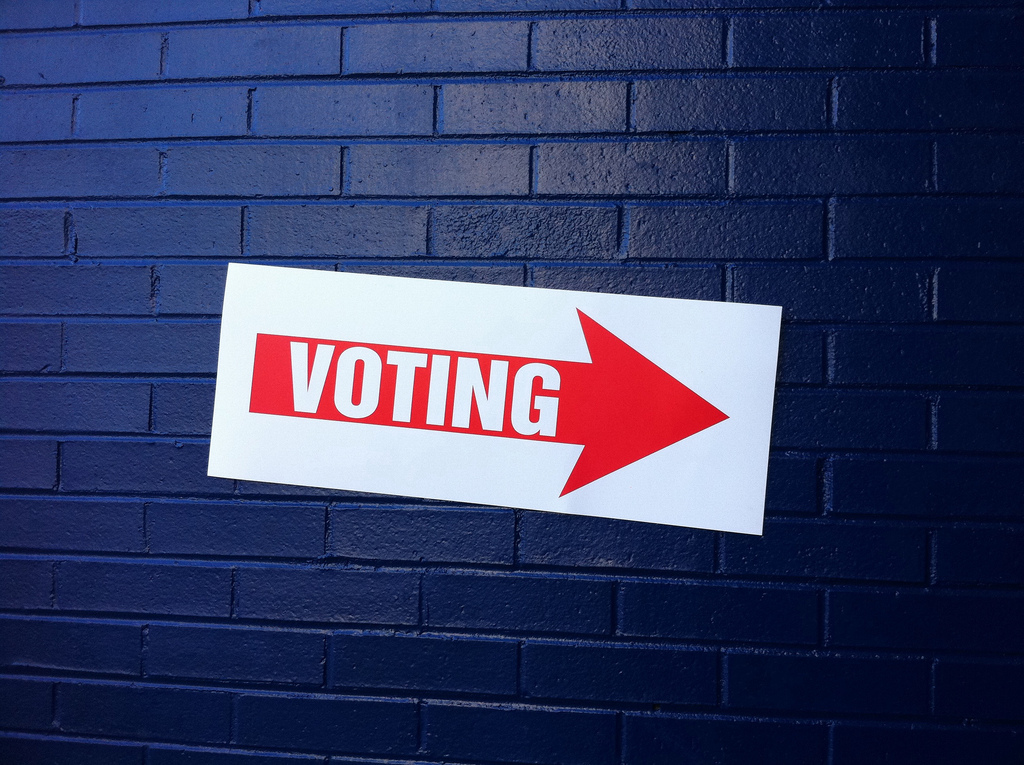
Cover image by justgrimes on Flickr.
 Persistence
Leave a comment