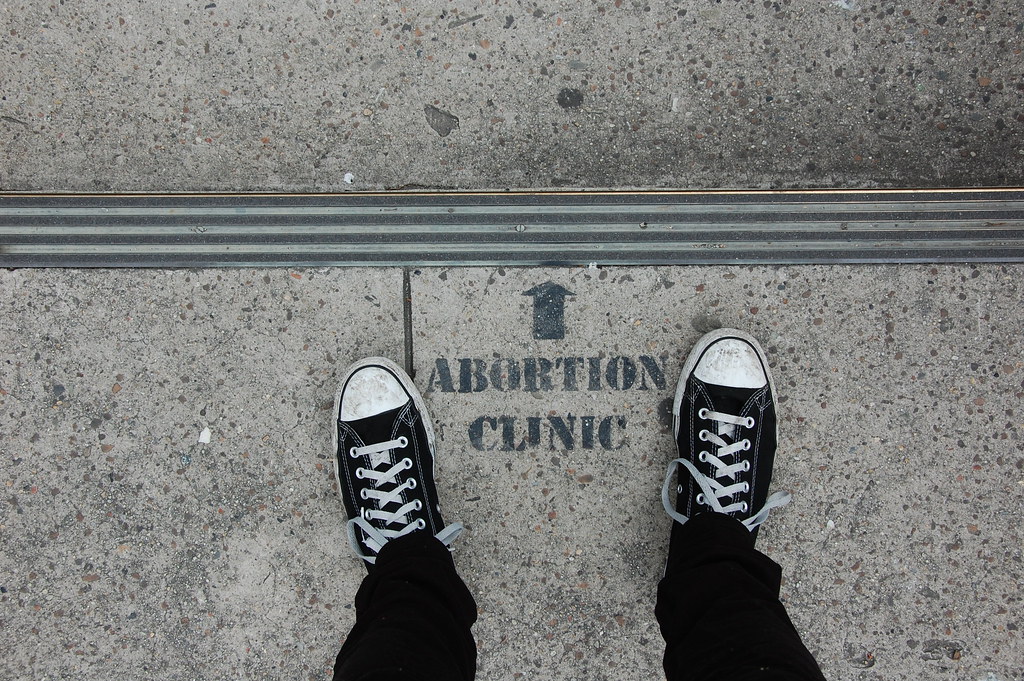
What’s the issue? Today the governor of Alabama signed into law the most restrictive abortion law in the United States. The law bans all abortions- including in cases of rape or incest- and makes an exception only when the woman’s life is in serious danger. Doctors charged with performing an abortion could be imprisoned for life.
Why do I care? Where to even begin? It has been widely established in international court of law that abortion is a human right, as well as part of comprehensive sexual and reproductive care. Allowing women to control when and if they have children is a basic form of bodily autonomy, and one of the biggest things we can do to ensure women’s equality. Surgical abortions are extremely safe, and medication abortion is even more so. The rate of complication from abortion procedures is far lower than the rate of morbidity and death from pregnancy, especially as maternal mortality rises in the United States (particularly for women of color). Meanwhile, restricting abortion access does not decrease the number of abortions- it merely drives them underground and makes many unsafe. In the areas of the world where abortion is most restricted, unsafe abortions are a major cause of maternal mortality. If you need more convincing on this front, see my previous posts on the importance of access to safe abortion and the problems with defining life beginning at conception.
So let’s for a moment take a look at what happens when abortion is outlawed, as it will be in Alabama if the law is not struck down by the courts. (Note: Abortion is currently still legal in Alabama, and will be for at least six months until the law takes effect). We don’t have to look far- abortion is severely or totally restricted in most countries in Latin America. That’s why in El Salvador you have women serving thirty year prison sentences for having a miscarriage, and women in Ecuador being taken to prison directly from their hospital beds and still bleeding, less than 24 hours after a pregnancy loss. Did you know that there’s no physiological difference between a miscarriage and a medication abortion? A doctor can’t tell the difference. Any woman who goes through the heart-wrenching pain of losing a wanted pregnancy would be in danger of being investigated for or convicted of a crime.
In Ecuador we have the case of Gaby (not her real name), who was raped by her father at age 11 and gave birth to his son at the age of 12. Ecuador (like Alabama), does not have a rape exception to their abortion restriction. Now, 4 years later, Gaby lives in a shelter because she was kicked out of her house, is severely emotionally stunted, and is emotionally detached from her 4 year old son, who Gaby says looks and acts just like her rapist father.
In the Dominican Republic a pregnant 16 year old girl, Esperancita, found out she had cancer. The doctors refused to treat her, as the treatment would cause an abortion. Esperancita died without receiving treatment as she waited (the fetus also died).
But it’s the doctors who will be criminalized in Alabama, you say (keep in mind that Texas recently proposed a bill that would criminalize women for having an abortion), and Alabama has an exception for serious risk to the life of the pregnant woman. Tell me this, would you want your medical team to have to stop to try to evaluate just how at risk for death you really were, while knowing if they made the wrong call they could spend their lives in prison? Would this not affect your quality of care?
Even for legal exceptions, Latin America shows that significant barriers to access remain. In Argentina this year there was a 12 year old girl who was raped by her 60 year old neighbor, who didn’t find out she was pregnant until she was six months pregnant. Even though it is legal to have an abortion in the case of rape in Argentina, doctors stalled, priests intervened, the media jumped, and the girl did not get her legal abortion until she was 24 weeks pregnant. At this point her “abortion” was a c-section, and her baby lived for four days, unable to be saved. How much stalling would we tolerate if a woman’s life was in danger?
Make no mistake, these are not isolated cases. These are illustrative of life living under severe abortion restrictions. Meanwhile, if the goal is to decrease the number of abortions, we know how to do that- comprehensive sex education, a free and easily accessible suite of contraceptive options, and unrestricted, legal abortion. Happily these interventions also decrease unwanted pregnancies and maternal mortality. But then reducing abortions isn’t the real goal of this law. It’s a way to control women, reeking of sexism and misogyny.
What to do if you care too:
- Support litigation. There are organizations who will argue this case all the way up to the Supreme Court, and hopefully win. They don’t really need your money to do this, but if it makes you feel better, look no further than the ACLU and Planned Parenthood.
- Help guarantee access to safe abortion to pregnant people in Alabama, donate to the Yellowhammer Fund, which gives money to those in need of abortions and The Brigid Alliance, which helps people who need to travel to access safe abortion care. You can also volunteer through Planned Parenthood to accompany people having an abortion.
- Obviously now is the time to get really angry and politically involved. Check out Supermajority, a political action group run by the former head of Planned Parenthood, Cecile Richards, that aims to put women and gender equality at the front and center of the political debate.
- Talk to people about abortion. The majority of Americans think abortion should be legal. Add your voice to the chorus.
- Vote. Trump’s election and subsequent Supreme Court nominations are what got us into this mess in the first place. Don’t tell me elections don’t matter.
Cover image from BeautifulUglyPeople on Flickr.
 Persistence
Sarah–glad to see you writing this blog again although I certainly it would be better if there were no need. I am so transported back to the past when I witnessed women brought into the hospital, dying from infection following illegal abortion. 1965. This spring I’ve been watching the series, Call the Midwife as they portray in stark and realistic terms, the consequences of illegal abortion. Incomprehensible that we might return to this and yet possible. I am so encouraged by the Supermajority organizing.
LikeLike